A five-minute stretch break for desk days
A short standing sequence you can do beside your chair in work clothes, plus how to tie the break to your day so it still happens in busy weeks.

A full stretching routine rarely fits between two calls, but five minutes standing next to your chair usually does. You need no mat, no change of clothes and only enough room to stand. Below is one simple sequence, plus a few ways to make sure it actually happens on a busy day.
Tie the break to something you already do
Breaks planned for "when things calm down" tend to slip. It is easier to attach the break to a moment that comes round every day anyway: the end of your first meeting, the walk back from the kettle, or the minute before lunch. Two anchors a day are plenty to start with.
If you like reminders, a recurring calendar entry works well. Give it a plain name such as "Stand up" so it doesn't look odd when you share your screen.
A five-minute standing sequence
Move slowly and stay in a range that feels easy. Each step takes roughly a minute, and you can do all of it in work clothes.
- Stand with your feet hip-width apart and let your shoulders drop. Take five slow breaths through the nose.
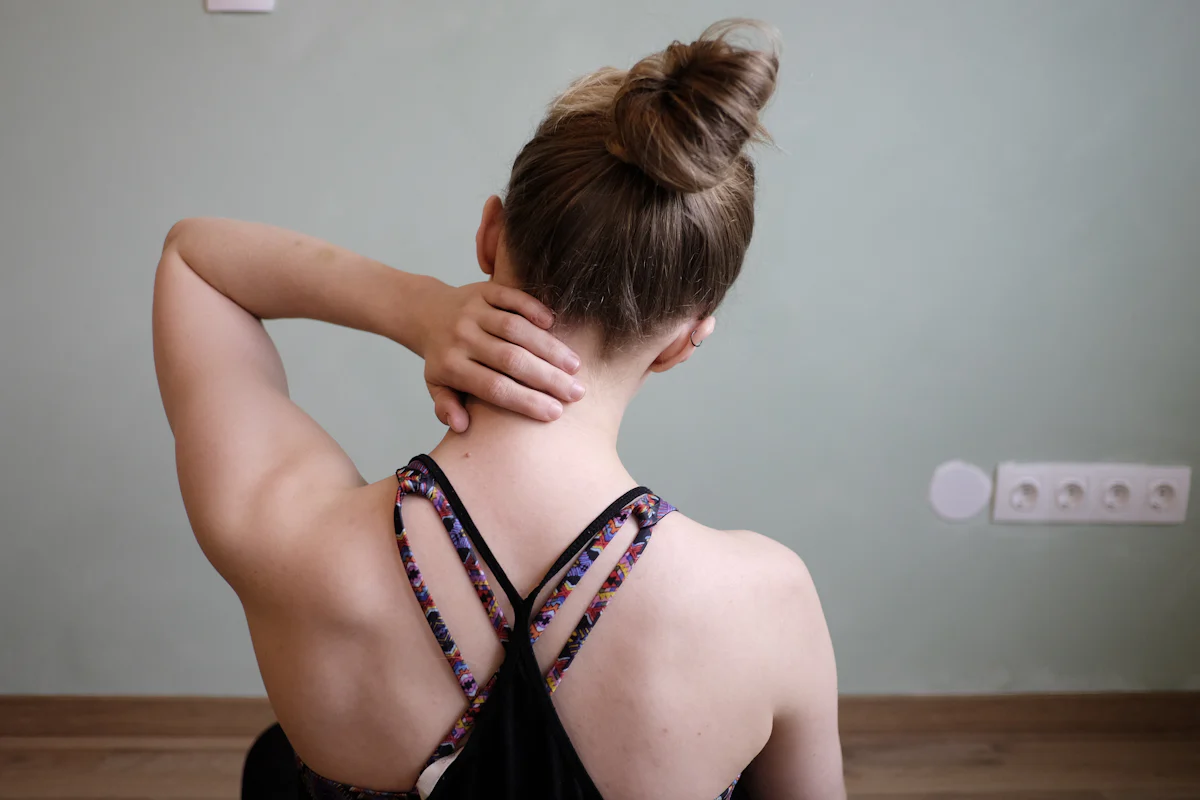
- Tilt one ear toward its shoulder and hold for a few breaths, then switch sides. Keep the other shoulder low.
- Lace your fingers, turn the palms outward and reach your arms forward at chest height, rounding the upper back a little. Then clasp your hands behind you and open the chest.
- Hold the back of your chair, step one foot back and press the heel toward the floor for a calf stretch. Swap legs.
- Stand tall and sway gently from side to side, letting the arms hang. Finish with three more slow breaths.
A mild pull is the right amount. If anything pinches or feels sharp, ease off or skip that step.
Making it work in a shared office
Some people feel self-conscious stretching at their desk. A few small changes help:
- Use a quieter spot, such as a meeting room between bookings or the corridor near the printer.
- Choose the standing moves above and leave floor work for home.
- Pair the break with something that looks routine, like refilling a water bottle.
Working from home makes this easier, though the anchor matters even more there, because nothing else interrupts a long sitting stretch.
Keep a light record
A tick on a sticky note or a note in your phone is enough. After two weeks, look back. If you managed most days, keep going as you are. If you missed most of them, the anchor is probably the problem, so move the break to a different moment instead of making it longer or harder.
Once the five minutes feel automatic, you can add a second break in the afternoon or swap in a different body area each day. Keep the minimum small so it survives the busy weeks.
Where to go next
If you would rather follow a guided version than remember the steps, stretching apps such as Bend include short desk routines you can filter by time and body area. Our homepage explains how those filters work, and our article on short daily sessions versus longer weekly ones can help you decide how often to stretch.